

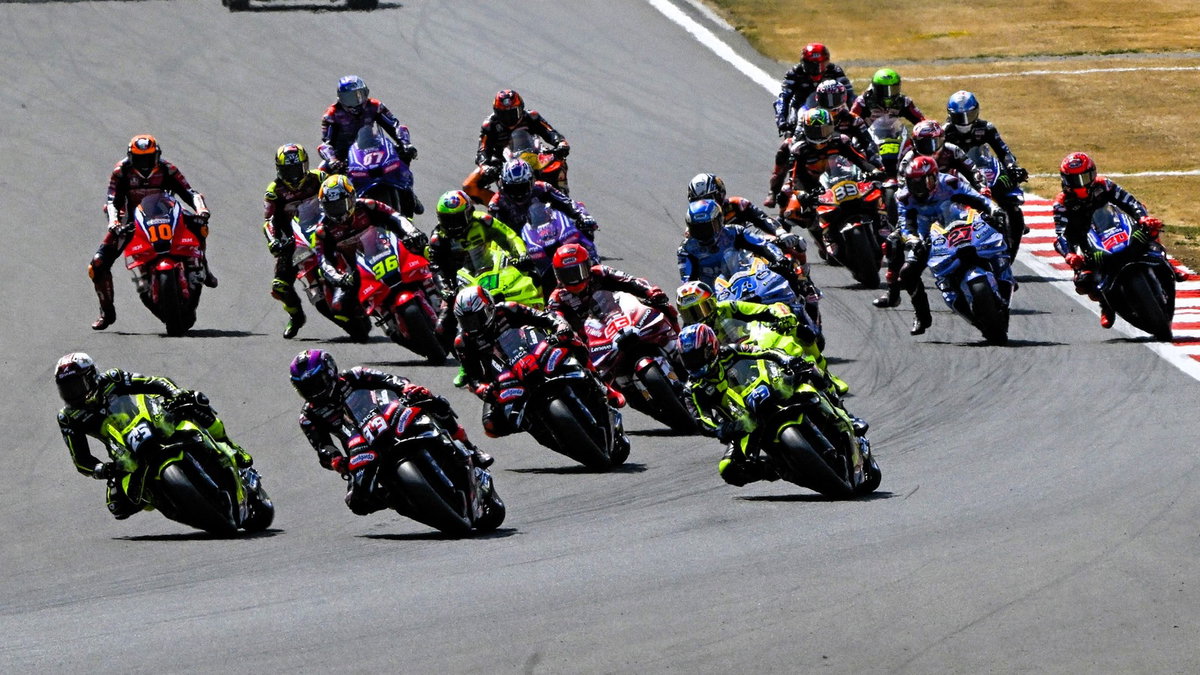
As MotoGP prepares for a landmark technical overhaul in 2027, former premier-class rider Pol Espargaro has thrown a provocative thought into the paddock: the sport’s current elite might find themselves on the back foot when the new rules arrive. In a recent interview, Espargaro suggested that the sweeping changes could reshuffle the established order, with Moto2 graduates potentially holding a significant edge from the very first race.
The 2027 regulations are set to introduce a host of modifications, including a reduction in engine capacity from 1000cc to 850cc, a shift to 100% sustainable fuels, and a ban on ride-height devices. These changes are designed to lower costs, increase safety, and improve the spectacle, but they also represent a clean slate for engineers and riders alike. For Espargaro, that means the usual pecking order—built on years of accumulated data and finely tuned setups—could be turned on its head.
Why Moto2 Rookies Could Thrive
Espargaro’s argument centers on the idea that Moto2 riders, who are accustomed to less electronic assistance and more physical riding, might adapt more quickly to the new MotoGP machines. The removal of ride-height devices, for instance, will force riders to rely on their own throttle control and braking stability, skills that are honed in the junior categories. Additionally, the reduced power output of the 850cc engines could narrow the gap between the factory bikes and the rest of the field, making rider talent more decisive than ever.
“In 2027, Moto2 riders will have a big advantage,” Espargaro said, as reported by Crash.net. “The bikes will be completely different, and the way you have to ride them will be closer to what they’re used to. The current stars have spent years perfecting their style with the current bikes, and suddenly everything changes. The rookies won’t have to unlearn anything.”
Espargaro’s comments carry weight given his own experience. The Spanish rider, a former Moto2 world champion, made his MotoGP debut in 2014 and has ridden for factories like Yamaha, KTM, and Honda. He knows firsthand how difficult it is to adapt when the machinery shifts beneath you, and he also knows the value of coming in fresh.
Leveling the Playing Field
Historically, MotoGP has been a series where experience and development feedback are paramount. Factory riders work closely with engineers to refine every aspect of the bike, and that deep knowledge often translates into performance. But with the 2027 regulations, much of that accumulated knowledge will become obsolete. Teams will start from scratch, and riders who can quickly communicate their needs and adapt to new characteristics will have an edge.
For established stars like Francesco Bagnaia, Marc Marquez, or Fabio Quartararo, the challenge will be to reset their instincts. They have spent years braking later, leaning harder, and exploiting the current electronics to the maximum. The new rules will demand a different approach, one that might feel more natural to riders coming up from Moto2, where the bikes are more mechanical and less reliant on sophisticated software.
Moreover, the ban on ride-height devices—which have been used to lower the bike for better acceleration out of corners—could be a great equalizer. These devices have become a hallmark of modern MotoGP, and mastering them has been a key differentiator. Without them, the bikes will handle more like their predecessors, and that could favor riders with a more classic, smooth style.
Uncertainty Ahead
Of course, Espargaro’s prediction is just that—a prediction. The 2027 season is still a year away, and much can change in the interim. Teams will have ample time to develop their new machines, and the current stars will have plenty of testing opportunities to adapt. But the uncertainty is real, and it adds an intriguing layer to the narrative of MotoGP’s future.
The series has always thrived on change, and the 2027 rules are among the most significant in its history. They promise to make the racing closer and more unpredictable, which is great for fans. But for the riders, they represent a formidable challenge. As Espargaro points out, those who can embrace the change—rather than fight it—might come out on top.
For now, the MotoGP paddock is focused on the present, with the 2026 season still in full swing. But the countdown to 2027 has already begun, and Espargaro’s warning is a reminder that in motorsport, nothing is ever guaranteed. The established stars may have the pedigree, but the newcomers might just have the edge when the lights go out for the first time under the new regulations.
Only time will tell if Espargaro’s insight proves correct, but one thing is certain: MotoGP is heading for a fascinating new era.


