

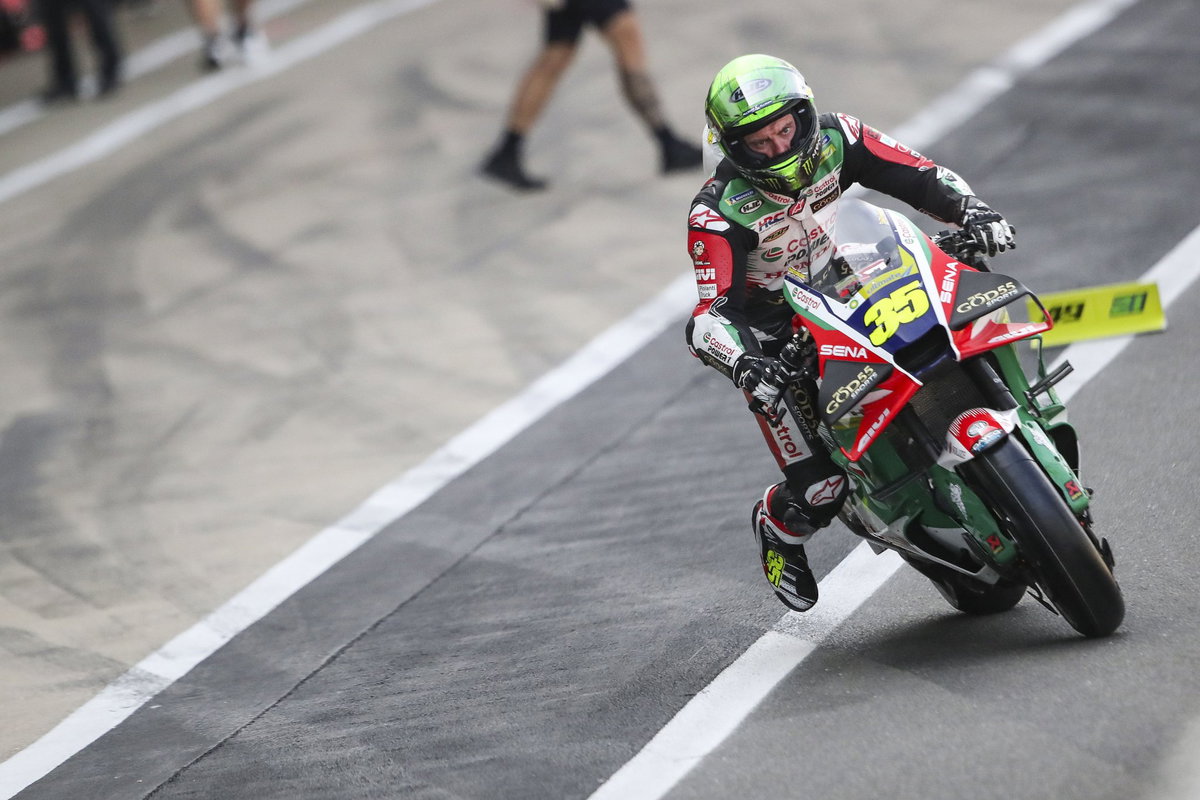
When Cal Crutchlow rolled out of the garage for his first MotoGP race in over a year, fans expected a nostalgic reunion. Instead, the 41-year-old Brit delivered a typically blunt assessment: he still doesn’t miss the sport. Despite being called up to replace the injured Johann Zarco, Crutchlow’s return is purely professional, not emotional.
Crutchlow, who retired from full-time racing at the end of 2022, has been drafted in by Yamaha to fill the void left by Zarco, who is sidelined with a broken wrist. The move marks a surprising comeback for a rider who had settled into a testing role with the Japanese manufacturer. But while the paddock buzzes with excitement, Crutchlow remains characteristically unimpressed.
“I don’t miss the sport,” he said, echoing a sentiment he has expressed before. For Crutchlow, racing is a job—one he does exceptionally well—but not a passion that consumes him. His return is born out of necessity, not desire. Yamaha needed a rider with experience and speed, and Crutchlow, despite his retirement, still possesses both.
A Pragmatic Approach
Crutchlow’s career has been defined by his no-nonsense attitude. From his early days in World Superbikes to his nine MotoGP victories, he has never been one for sentimentality. His return to the grid is no different. He knows his role: to provide valuable data and feedback to help Yamaha develop their bike, and to score points if possible.
“I’m here to do a job,” he said. “The team needed someone, and I was available. It’s as simple as that.” His words may sound cold, but they are also refreshing in a sport often dominated by PR-speak. Crutchlow has always been honest, and that honesty is exactly what Yamaha needs in a difficult season.
The Japanese manufacturer has struggled in 2026, with its factory riders consistently off the pace of the Ducatis and Aprilias. Crutchlow’s experience could prove invaluable in helping them understand where they are losing time. His feedback during the test sessions has already been praised by team engineers, and his presence on the grid provides a benchmark for the younger riders.
No Room for Nostalgia
Despite the romanticism of a comeback, Crutchlow is quick to dismiss any notion that he is reliving his glory days. “I don’t look back,” he said. “I’m not here to relive anything. I’m here to do a job, and when it’s done, I’ll go back to my normal life.”
That normal life includes spending time with his family and working on his off-road projects. Crutchlow has never been one for the limelight, and he seems genuinely indifferent to the attention his return has generated. “People make a big deal out of it, but it’s just racing,” he said.
His comments have sparked debate among fans, some of whom question why a rider who doesn’t miss the sport would bother returning. But Crutchlow’s answer is simple: loyalty. Yamaha gave him a testing role after his retirement, and when they came calling, he felt obliged to help.
“I have a good relationship with Yamaha,” he explained. “They’ve been good to me, and if I can help them, I will. It’s not about passion; it’s about professionalism.”
A Changing of the Guard
Crutchlow’s return also highlights the changing nature of MotoGP. With a new generation of riders like Pedro Acosta and Fermin Aldeguer making waves, the sport is moving on. Crutchlow, one of the last remaining riders from the 2010s era, is a reminder of a different time.
Yet, even as he acknowledges the shift, he remains unbothered. “The sport evolves, and that’s fine,” he said. “I’m not trying to prove anything to anyone. I’m just doing what I’m asked to do.”
His performances so far have been respectable, if not spectacular. In his first race back, he finished just outside the points, but his pace in practice was encouraging. For a rider who hasn’t raced in over a year, that is no small feat.
As the season continues, Crutchlow will likely feature in a few more races before Zarco returns. But don’t expect him to get emotional about it. He’ll do his job, offer his feedback, and then walk away without a backward glance.
In an era where riders often speak in clichés, Crutchlow’s blunt honesty is a breath of fresh air. He doesn’t miss MotoGP, but he’s here anyway—and that’s exactly what makes him so valuable.


