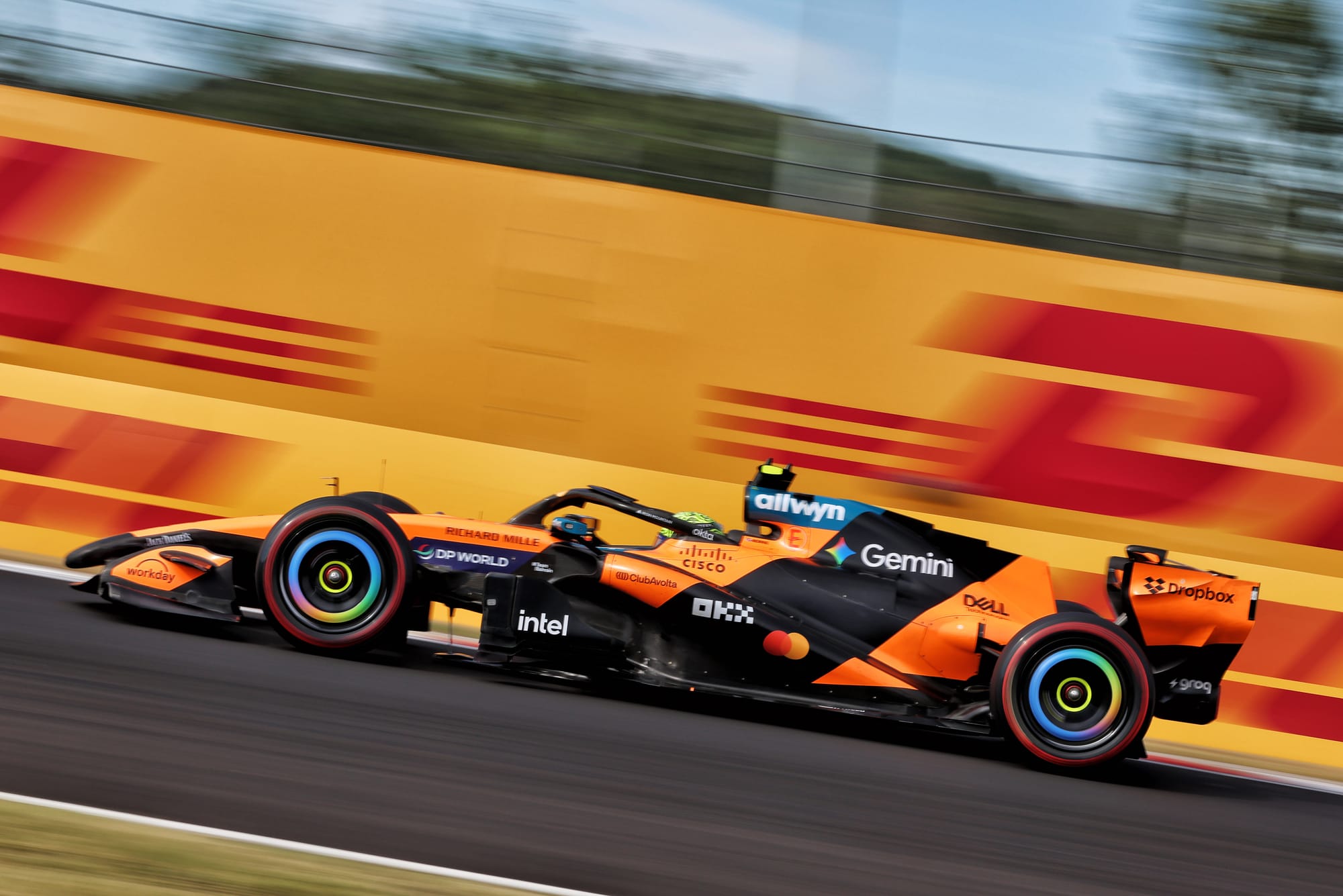
McLaren has conceded that the wheelbase of its 2026 Formula 1 car was pitched too short, a decision that is now restricting aerodynamic development and cannot be fully rectified until the 2027 car. The admission comes as the reigning champions have struggled more than expected this season, finally returning to winning ways at the Hungarian Grand Prix with Lando Norris.
The team’s technical director for engineering, Neil Houldey, explained that the short wheelbase was a deliberate choice to help meet the stringent weight regulations introduced with the new rules. The thinking was that a lighter car would provide a head start, allowing performance to be added elsewhere. However, the trade-off has been a smaller floor area, which limits the downforce-generating potential of the underfloor.
"Initially, we put a shorter car together because it’s lighter and we knew that the weight regulations were going to be a big, big challenge," Houldey said. "That gave us a nice head start and allowed us to put performance in different areas."
While the car has been competitive, McLaren has found that as the floor development has progressed, the shorter length has become a hindrance. The team now plans to move to a longer car for 2027, acknowledging that the current design has limited the aerodynamic potential that could be unlocked with a larger floor plan area.
This isn’t a catastrophic blunder—the same car won in Hungary—but it illustrates the delicate balancing act teams face under the new regulations. The fact that it took 11 races for McLaren to secure its first win of 2026 suggests the development path has been more challenging than anticipated.
McLaren has also been open about other areas where it has fallen behind. The team admits it is running three months behind its main rivals in development, partly because the 2025 title fight went down to the wire, delaying focus on the new car. This has manifested in a car that initially lacked aerodynamic load and was excessively draggy, forcing the aerodynamicists to find downforce without adding drag.
Efficiency is now the key battleground, and McLaren is working on new rear wings, including an innovative design dubbed the ‘macarena’ wing, which has yet to race. A new, more efficient rear wing is expected at the Dutch Grand Prix, with the ‘macarena’ possibly appearing at Monza.
Another significant issue is the integration of the Mercedes power unit. As a customer team, McLaren has limited influence over how the engine is operated and has struggled with gear ratios that were chosen based on projected power curves from Mercedes that didn’t match reality. The ratios are locked for the season, with only one irreversible change allowed, and McLaren has so far chosen not to use it.
"If we had our time again, we’d re-ratio to be closer to where Mercedes are," Houldey admitted. The team has created a new ‘power unit performance team’ to better understand and maximise the engine’s potential, but the disadvantage of being a customer remains.
Despite these setbacks, McLaren remains optimistic. The lessons learned this year will inform the 2027 car, and the team is confident that the longer wheelbase will unlock the aerodynamic performance needed to challenge at the front consistently.
The 2026 season has been a humbling experience for the champions, but their willingness to openly diagnose their problems suggests a team that is still capable of bouncing back. With the wheelbase error set to be corrected and new processes in place for engine integration, McLaren will hope to return to its dominant form sooner rather than later.