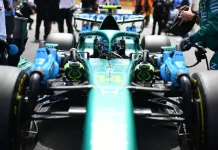
Former Red Bull supremo Christian Horner has emerged as the prime candidate to fill the impending vacancy at Aston Martin, with current Team Principal Andy Cowell reportedly set to transition into a powertrain-focused role.
Our panel of experts weighs in on the prospect of Aston Martin becoming the vehicle for Horner’s sensational F1 return, and the implications of sidelining Cowell.
Anderson: Newey Needs Stability, Not Star Power
By Gary Anderson
When Andy Cowell’s interview was published a few months ago, I noted that he seemed to underestimate the gravity of hiring Adrian Newey. He appeared to view Adrian as just another staff member, which is a gross miscalculation. Newey is the captain of the ship; he is the architect who will steer this team to victory. Whether that happens next year or in three years remains to be seen, but it is inevitable.
Adrian has dragged Williams, McLaren, and Red Bull to glory, often without receiving the full credit he deserved. Now, he holds equity and the ultimate backing of the ownership. For the rest of the team, if he says ‘jump,’ the only appropriate response is ‘how high?’
Cowell is a brilliant engineer, instrumental in Mercedes’ hybrid dominance from 2014, but that is a distinct discipline from being a Team Principal. In my view, modern F1 teams need engineering leadership at the core, while the Team Principal manages the day-to-day operations.
Horner, like Martin Whitmarsh at McLaren, was someone who didn’t accord Adrian the respect he merited at Red Bull. Whitmarsh has also been linked to Aston Martin—though he reportedly has no interest in returning. Why would Lawrence Stroll risk bringing in figures like Whitmarsh or Horner, who could upset the apple cart and set the team back months, if not years?
F1 is becoming like the Premier League, with managers rotating between clubs. But if I were Stroll, I’d look inwards. Andy Stevenson has been driving to the same address for over 35 years, evolving from a mechanic in the Jordan GP days to Sporting Director of the Aston Martin metropolis. He understands the team’s heartbeat. Promoting him ensures progress without throwing a spanner in the works with an outsider’s agenda. With Newey’s 2026 car and Alonso’s grit, success is around the corner—don’t throw it away before it flourishes.
Freeman: The Red Bull Blueprint is Incomplete Without Verstappen
By Glenn Freeman
With F1 shifting toward a model where team bosses are employees rather than owners, the door is open for a strategy common in other sports: poaching talent from a successful rival to replicate their winning formula.
Given Red Bull’s recent dominance, the logic is sound: acquire their ex-boss, their star designer, and their engine partner, and hope to recreate the magic. It’s reminiscent of Ferrari poaching Benetton’s core in the mid-90s, but on steroids.
However, that comparison highlights a missing variable. Ferrari’s transformation hinged on Michael Schumacher. The question remains: could Max Verstappen be tempted to switch from blue to green, especially if Red Bull stumbles out of the gate with the 2026 regulations?
As for past tensions at Red Bull, history suggests that interpersonal friction can be easily brushed aside if there are World Championships to be won.
Mitchell-Malm: A Revolving Door of Leadership Spells Trouble
By Scott Mitchell-Malm
If this were Alpine linked to yet another leadership change, the derision would be palpable. Aston Martin’s colossal investment and star-studded roster afford it some grace, but a fourth team boss in five years is hardly indicative of a stable vision.
This move appears influenced by Newey’s arrival and his vision for the team’s structure. Someone new has Lawrence Stroll’s ear, perpetuating the owner’s habit of discarding and appointing senior figures. While understandable when the advisor is Newey, the constant churn is concerning.
It suggests Stroll may be out of touch with the team’s actual needs, believing that an expensive collection of winners will default to a winning team. He has already seemingly revised history, claiming a 10-year timeline for victory, contradicting his 2021 projection of four to five years.
Success cannot simply be bought; it can only be expensively assembled. While Stroll puts his money where his mouth is, the reward is yet to materialize. This level of turnover risks wasting the massive opportunity presented by the 2026 regulations, leaving the team weaker than the sum of its very expensive parts.
Beer: The Risks of an Engineering ‘Supergroup’
By Matt Beer
As Aston Martin continues to recruit top-tier technical leaders who have held command elsewhere, I’ve worried this might become a jigsaw puzzle that refuses to fit.
The logic of hiring proven winners is sound, but creating a hierarchy where everyone is used to being “the boss” is risky. The shifting roles of Cowell and Newey suggest an attempt to smooth out incompatible pieces. As Gary Anderson argues, the priority now is finding a fit.
While Horner and Newey’s history suggests compatibility, the manner in which their partnership ended at Red Bull raises questions. Can that baggage really be shrugged off so easily?
Benyon: Horner is the Only Logical Fit for a Super-Team
By Jack Benyon
While he wouldn’t be my personal choice, Christian Horner is a “no-brainer” for Aston Martin.
Promoting from within—placing someone without the requisite experience or gravitas to manage the massive egos now residing at Silverstone—could be a recipe for disaster. The only available candidate with the credentials to satisfy Stroll, Newey, and the rest of the heavyweight roster is Horner.
On a broader note, it is concerning how the Team Principal role has expanded beyond simple management to overseeing a sprawling corporate structure. This complexity makes internal promotion increasingly difficult. How can young talent, or individuals from diverse backgrounds, hope to ascend to a role that is now unrecognizable from what it was 15 years ago?
That isn’t Aston Martin’s fault, but it highlights a systemic roadblock at the top of the sport that feels more insurmountable than ever.