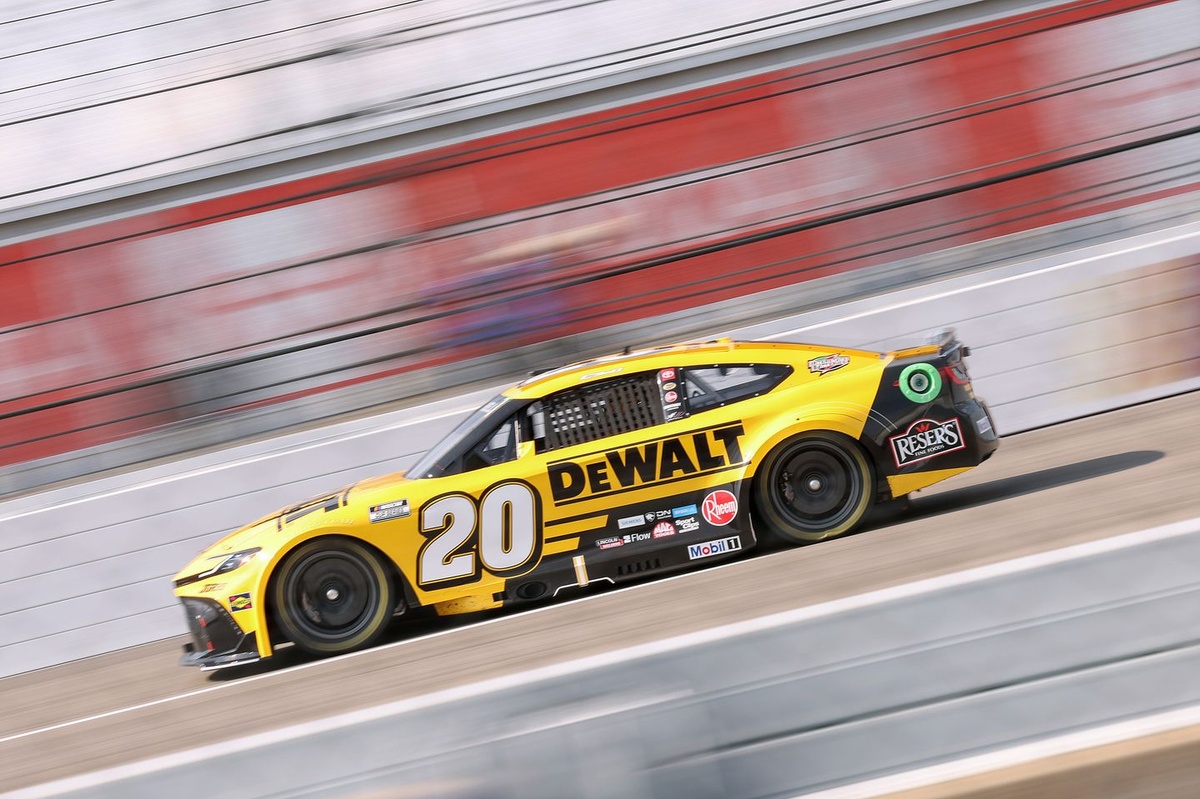
RICHMOND, Va. – The NASCAR Cup Series rolled into Richmond Raceway for its regular-season finale, but for two teams, the weekend got off to a rocky start before a single lap was turned. Pre-race inspection, the meticulous process that ensures every car meets the rulebook’s specifications, proved to be a stumbling block for the No. 20 Joe Gibbs Racing Toyota of Christopher Bell and the No. 51 Rick Ware Racing Chevrolet of Cody Ware.
Both machines failed inspection twice on Saturday morning, a situation that triggers immediate penalties under NASCAR’s protocols. The most notable consequence: the crew chiefs for both entries were ejected from the track for the remainder of the race weekend. That means they were forced to hand over their leadership duties and watch the race from outside the garage, a significant disruption for any team, especially with playoff implications on the line.
According to series officials, each car ultimately passed on its third attempt. That third-time-lucky outcome spared the drivers from the harshest penalty – being sent to the rear of the starting grid. Under NASCAR’s current inspection rules, a third failed attempt would have resulted in an end-of-line starting position, effectively wiping out any qualifying gains. Both Bell and Ware had already qualified, but their starting spots could have been compromised had they failed once more.
Understanding the Inspection Process
Pre-race inspection is a cornerstone of NASCAR’s technical enforcement. Teams present their cars to officials, who use a combination of templates, lasers, and other tools to verify that every dimension, weight, and component complies with the rulebook. The process is designed to level the playing field and prevent teams from gaining an unfair advantage through creative engineering.
When a car fails inspection, the crew chief is typically the first to face consequences. In recent years, NASCAR has adopted a tiered penalty system. A first failure is often a warning, but a second failure results in the ejection of the crew chief. A third failure would add a starting-grid penalty, and further failures could lead to even steeper fines or points deductions. The system is meant to encourage teams to be precise and thorough before they arrive at the track.
For Bell, who is fighting to secure a spot in the NASCAR Cup Series playoffs, the timing of this issue is less than ideal. The No. 20 team has been one of the strongest all season, and Bell is a legitimate championship contender. Any disruption, even a minor one, can have ripple effects on the team’s focus and morale. Crew chiefs are the strategic masterminds of a race team, making split-second decisions on pit road and adjustments throughout the race. Losing that leadership for the day forces the team to rely on the assistant crew chief and other engineers, a situation that can create communication gaps.
Cody Ware, on the other hand, is not in playoff contention. His No. 51 team is a smaller operation, and these kinds of inspection issues can be more damaging to a team with fewer resources. But Ware has shown steady improvement this season, and any setback is frustrating.
What Went Wrong?
Neither team has publicly detailed what caused the failures, and NASCAR officials declined to elaborate beyond the standard procedure. Typically, failures are due to minor deviations in body measurements, ride height, or other technical specifications. Given that both cars passed on the third attempt, it’s likely that the issues were relatively easy to correct, such as adjusting a panel or tweaking a suspension setting. However, the fact that they failed twice suggests a more stubborn problem, perhaps a misalignment that took time to diagnose.
The ejections mean that Bell’s and Ware’s crew chiefs will be absent from pit road during the race. They also will miss any post-race inspection, which is another layer of scrutiny. If their cars are found to be illegal after the race, the penalties could be more severe, including fines, points deductions, or even suspensions. But for now, both teams are hoping that their third-attempt passes will keep them out of further trouble.
Context and Significance
Richmond Raceway is a short track known for its demanding nature, and the race itself is crucial as the regular season comes to a close. Bell is among the drivers looking to solidify his playoff position, and a strong finish at Richmond could provide momentum heading into the postseason. Ware, while not in the playoff hunt, is racing for pride and to build for the future.
Inspection issues are not uncommon in NASCAR, but they often make headlines when they involve playoff contenders. Earlier this season, several teams faced similar problems, leading to a renewed emphasis on pre-race preparation. The fact that two cars failed twice on the same day is a reminder that even the best teams can make mistakes.
For fans, the drama adds another layer of intrigue to an already intense race weekend. The ejection of crew chiefs is a visible sign of NASCAR’s commitment to enforcing its rules, and it serves as a cautionary tale for teams across the garage. As the green flag waved at Richmond, both the No. 20 and No. 51 teams had to adapt on the fly, hoping that their third-time-luck would translate into a successful day on the track.