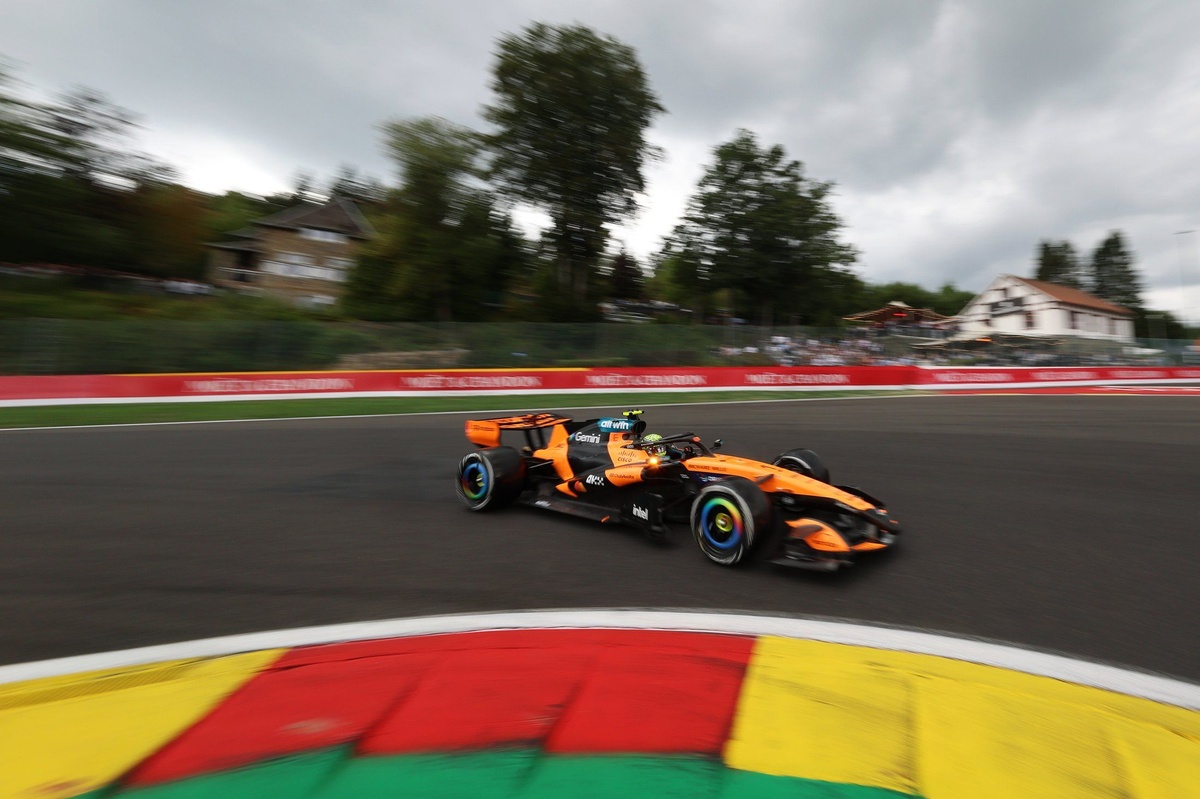
Throughout the 2026 Formula 1 season, a familiar grumble has echoed through the paddock: the new-generation cars, with their complex hybrid systems, are too reliant on energy management, leaving drivers as mere passengers at certain circuits. But McLaren, one of the sport’s most storied teams, has pushed back against the narrative, insisting that the best drivers can still make a decisive difference.
The complaints have been rumbling since before the season even began. They intensify at what are dubbed ‘energy-starved’ circuits, where the layout—the ratio of corners to straights, and the type of corners—makes it difficult for the cars to recharge their batteries through the lap. At these tracks, drivers often find themselves lifting and coasting to save energy, a process that can feel more like a fuel economy run than a flat-out race.
However, McLaren’s stance is clear: while the energy challenge is real, it has not diminished the importance of driver skill. In fact, the team argues, it has amplified it. The ability to manage energy without losing lap time, to know exactly when to lift and when to push, and to adapt to the ever-changing state of the battery is a craft that separates the good from the great.
The narrative gained further nuance after a tweak to the regulations implemented ahead of the Miami Grand Prix. The tweak, designed to address some of the energy concerns, was a small but significant adjustment. It has helped to ease the burden, but it has not eliminated the challenge. McLaren believes that this is precisely where the best drivers earn their keep.
In a sport where thousandths of a second matter, the ability to extract performance from a car that is constantly balancing power, energy, and tire degradation is a hallmark of a top-tier driver. McLaren’s faith in driver skill is not just about optimism; it is rooted in the data and the feedback from their own drivers, who have shown that a well-executed energy management strategy can be the difference between a podium and a midfield finish.
The debate is not new to Formula 1. In the hybrid era that began in 2014, similar complaints were leveled at the sport, yet the likes of Lewis Hamilton, Sebastian Vettel, and Fernando Alonso proved that driver input remained crucial. The 2026 regulations, with their increased electrical power and a push for more sustainable fuels, have intensified the challenge, but McLaren sees this as an opportunity rather than a setback.
For fans, the energy management era has been a mixed bag. Some decry the lift-and-coast tactics as artificial, while others appreciate the strategic depth it adds. McLaren’s perspective offers a middle ground: the rules may be demanding, but they reward those who can master them. The best drivers, the team insists, are not just surviving the energy wars; they are thriving in them.
As the season progresses and the grid visits more energy-hungry circuits, the debate will continue. But McLaren’s message is a timely reminder that Formula 1 remains a driver’s sport, even in an era of complex technology. The cars may be more challenging to drive, but that only makes the drivers’ role more critical.
In the end, the 2026 rules have not diminished the spectacle; they have merely changed the skill set required to succeed. And McLaren is confident that those with the sharpest instincts and the most disciplined minds will rise to the top.