Hendrick Motorsports, one of the most dominant teams in NASCAR history, is enduring a season that no one saw coming. With just three races left before the Chase, the team’s highest-placed driver is Chase Elliott in seventh, and reigning champion Kyle Larson has yet to visit Victory Lane. It’s a startling downturn for an organization that has won 14 Cup Series championships and countless races.
A Season of High Expectations
When the 2026 season began, Hendrick Motorsports was expected to be a powerhouse. Kyle Larson, the 2025 champion, was coming off a stellar year, and the team boasted a lineup of proven winners. But as the season unfolded, the results failed to match the hype. Larson, known for his aggressive style and raw speed, has been uncharacteristically off the pace. Elliott, while consistent, hasn’t been able to convert top-10 finishes into wins. The team’s other drivers, William Byron and Alex Bowman, have also struggled to find the front.
This isn’t just a blip. It’s a confounding pattern that has left fans and analysts scratching their heads. How can a team with so much talent and resources fall so far behind?
Kyle Petty’s Take
Kyle Petty, a former driver and now a respected analyst, weighed in on the situation. In a recent interview, Petty was blunt: “There’s no magic bullet.” He emphasized that the team’s problems can’t be solved by a single change or a stroke of luck. Instead, he pointed to the need for a fundamental reassessment of their approach.
Petty’s comments highlight a reality in modern NASCAR: the margin between winning and losing is razor-thin. A small aerodynamic tweak, a slight engine deficiency, or a strategic misstep can be the difference between a top-5 and a 20th-place finish. For a team like Hendrick, which has set such a high standard, even a minor regression becomes glaring.
The Significance of the Struggles
Hendrick’s struggles are significant for several reasons. First, it shakes up the championship picture. With Larson not winning, other drivers like Denny Hamlin, Martin Truex Jr., and Joey Logano have seized the spotlight. The Chase, NASCAR’s playoffs, will be wide open, and Hendrick’s drivers will have to fight for every point just to advance.
Second, it raises questions about the team’s long-term trajectory. Hendrick has been the gold standard for decades, but in a sport where parity is increasing, no team is immune to a downturn. The question now is whether this is a temporary slump or the beginning of a more prolonged decline.
Third, it puts pressure on the organization’s leadership. Rick Hendrick, the team’s owner, is known for his hands-on approach and his ability to rally his people. He’ll need to draw on all his experience to steer the ship back on course.
What’s Going Wrong?
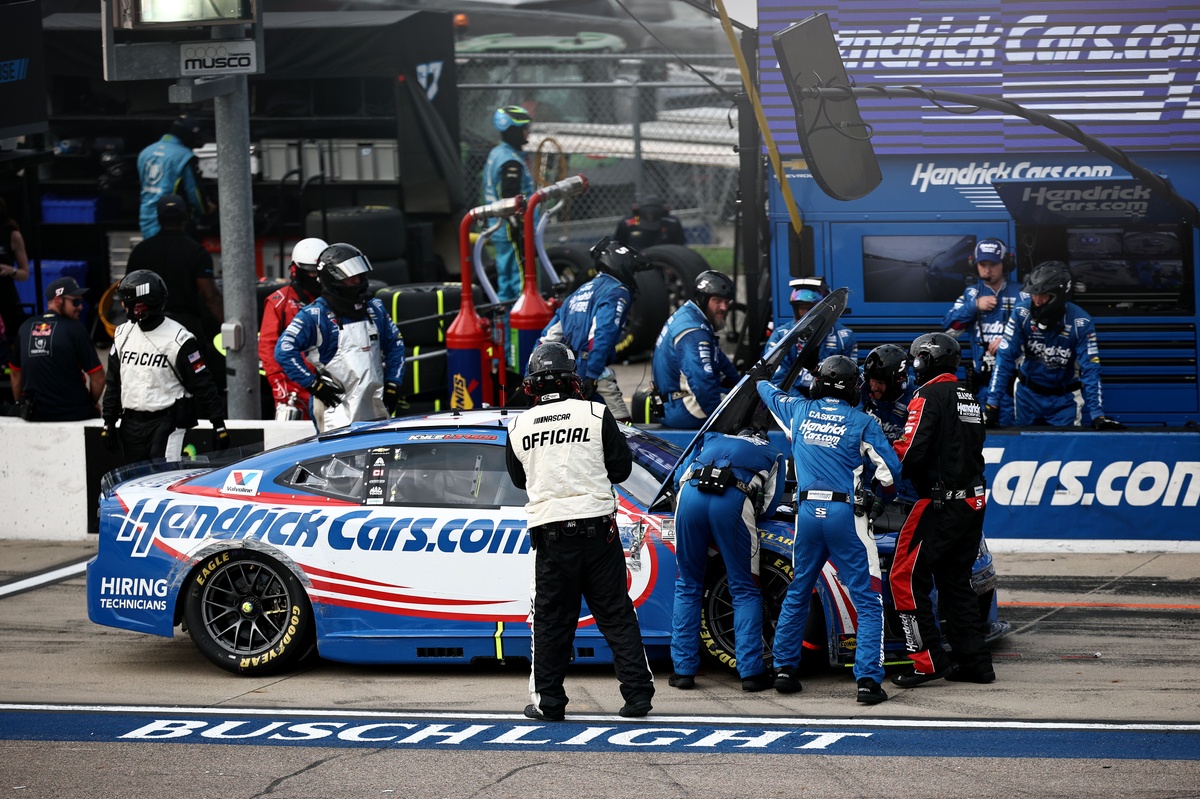
While Petty didn’t offer a specific diagnosis, several factors could be at play. The Next Gen car, introduced a few years ago, has leveled the playing field, making it harder for any one team to dominate. Tire management, pit strategy, and even the weather can now have outsized impacts. Hendrick’s struggles might also be a result of internal issues, such as communication breakdowns or a failure to adapt to rule changes.
There’s also the psychological aspect. When a team is used to winning, a losing streak can create tension and doubt. Drivers may start overdriving, and crews may make uncharacteristic mistakes. Breaking that cycle is often harder than fixing a mechanical issue.
Looking Ahead
With only three races left before the Chase, time is running out for Hendrick to turn things around. Elliott’s seventh-place standing gives him a decent shot at making a deep playoff run, but he’ll need to elevate his performance. Larson, despite his lack of wins, is still a threat if he can find his form. The team’s engineers and crew chiefs will be working overtime to find any edge.
Kyle Petty’s message is clear: there’s no quick fix. But that doesn’t mean all is lost. Hendrick Motorsports has the resources, the talent, and the history to bounce back. It will take patience, hard work, and perhaps a little luck. As Petty implied, the solution lies not in a single change but in a collective effort to improve every aspect of the operation.
For now, fans can only watch and hope that the team’s struggles are a temporary blip. In NASCAR, fortunes can change in a single race. The Chase is a new season, and anything can happen. But as Petty noted, there’s no magic bullet—just the grind of racing.