Formula 1 is a sport built on cutting-edge technology, yet when it comes to communicating crucial safety information, it often relies on a system that can be confusing even for the most experienced drivers. Former F1 designer and technical analyst Gary Anderson believes there is a far simpler and more effective solution: a universal traffic light system.
In a recent analysis, Anderson highlighted the difficulties drivers and broadcasters face when trying to interpret the current flag and lightboard warnings. At speeds exceeding 150mph, distinguishing between a stationary, waved, or double yellow flag is nearly impossible. Sky Sports and other broadcasters often struggle to tell them apart on replays, so imagine the challenge for a driver who has only milliseconds to react.
Anderson’s proposal is to borrow from the everyday traffic light system that everyone understands. By using green, yellow, and red lights—both steady and flashing—on cars and around the track, F1 could make safety warnings unambiguous and instantly recognizable.
The first part of his idea concerns the power mode of each car. Currently, drivers and teams have to monitor battery deployment and harvesting through complex telemetry. Anderson suggests using the existing rear wing and rear impact lights to convey this information to following cars. For example, a green light would indicate the car is using both the combustion engine and electrical power, while a flashing green light would warn that the battery is nearly depleted. A yellow light would mean the car is running on engine power alone, and a flashing yellow would indicate harvesting. A red light would signal that the car is generating electricity without propulsion, and a flashing red would mean the car has completely shut down.
Additionally, Anderson proposes a blue light on the rear impact structure and dashboard to warn a driver that a faster car is within one second and may attempt an overtake. If the blue light remains constant for more than ten seconds, the driver must let the following car pass without fail. This would help reduce the ambiguity that sometimes arises during blue flag situations.
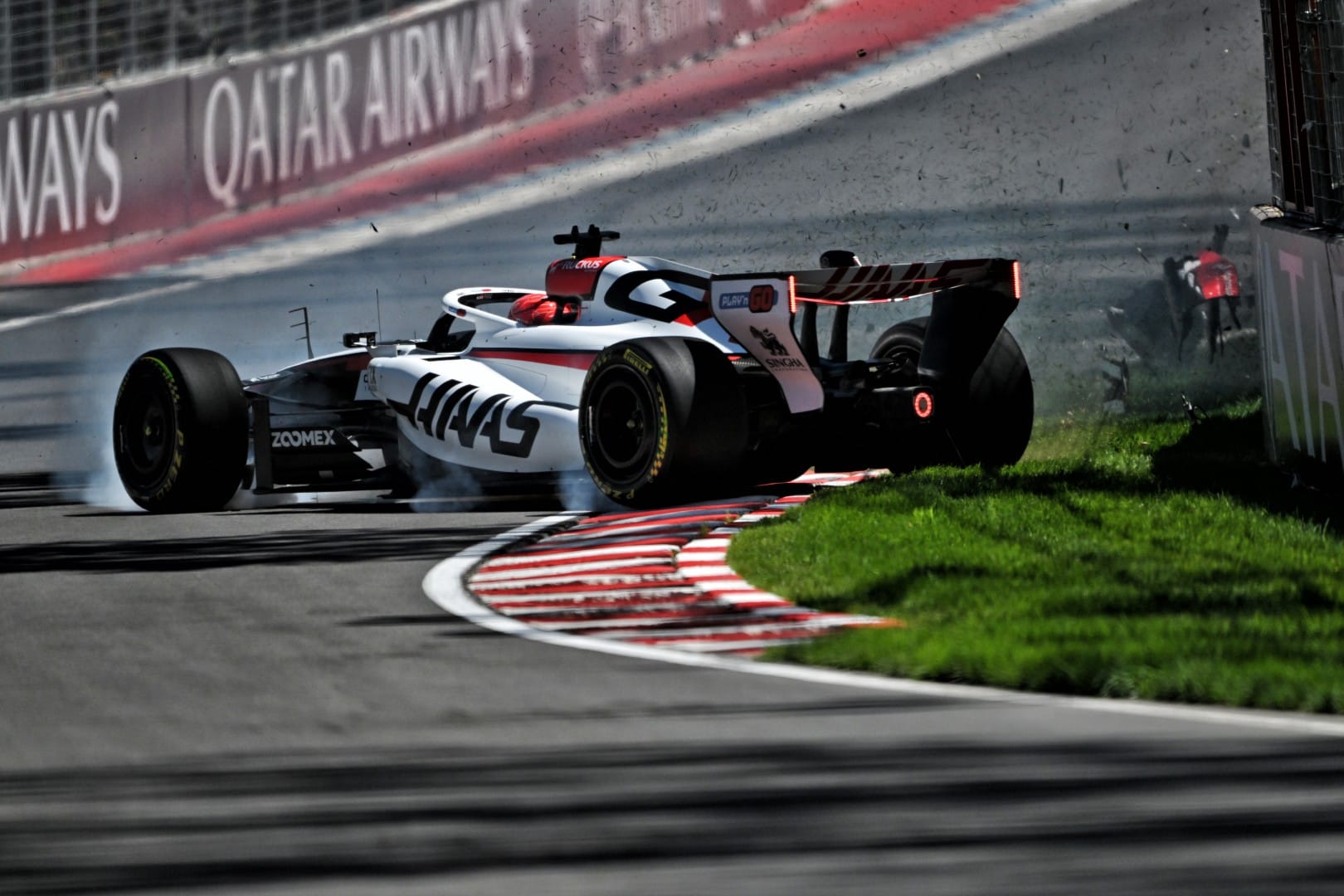
For track safety, Anderson suggests adding a front light to each car, possibly integrated into the camera housing or halo. This would allow marshals and other drivers to know immediately the status of a car that has gone off track or stopped. If a car goes off but is still moving, all its lights would flash yellow, and drivers would be required to slow by 10% compared to their previous lap speed. If a car has stopped with minimal impact (less than 10g), the lights would show steady yellow, and the speed reduction would be 25%.
In more severe cases, where a car has suffered an impact above 25g and medical assistance is needed, the lights would flash red. Track lights would turn red from the start/finish line to the incident, and drivers in that area would have to return to the pits. If the car is still live—meaning it is unsafe to touch due to high-voltage systems or other hazards—the lights would be steady red, and the same procedure would apply.
Anderson emphasizes that this system should be standardized across all cars, with the same lights, colors, and meanings. It should be an FIA-controlled system with a failsafe philosophy: if the system fails, it should default to red, indicating danger, rather than green, which would falsely signal safety. This is crucial because marshals and medical crews often have to approach damaged cars, and they need to know whether it is safe to touch them.
The current safety improvements in F1 focus on crash structures, stronger chassis, and other engineering solutions to protect the driver. While these are essential, Anderson argues that the safety of marshals and trackside crews is equally important and can be enhanced through better communication. A simple traffic light system would provide clear, unambiguous information to everyone involved, from drivers to race control.
Formula 1 often overcomplicates things, but sometimes the best solutions are the simplest. A traffic light system is about as clear as communication gets. It is not something that requires years of committees and debates over shades of red. It is a straightforward, idiot-proof system that could significantly improve safety and reduce the risk of misinterpretation in high-pressure situations.
As Anderson notes, F1 spends a fortune on technology, but the most effective safety measures are often the ones that are easy to understand and implement. By adopting a universal traffic light system, the sport could make a significant step forward in protecting everyone involved, both on and off the track.