

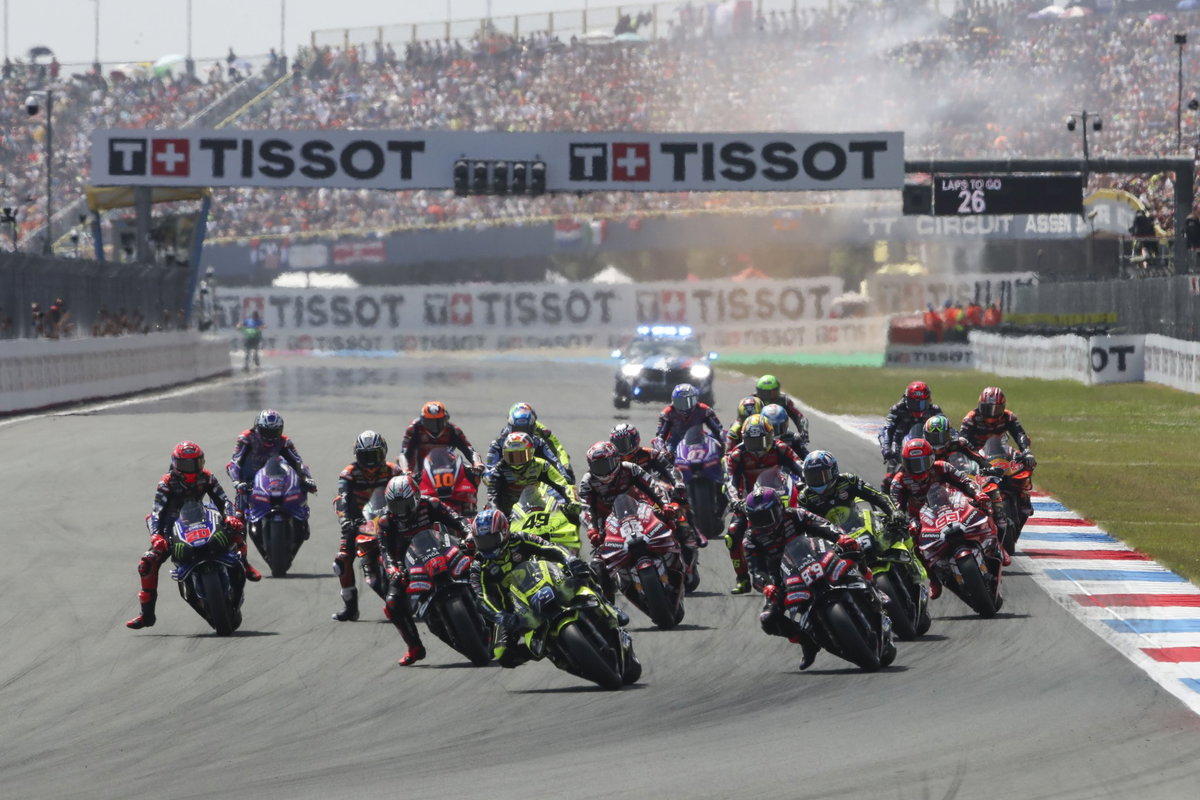
MotoGP’s decision to relocate its Australian round from Phillip Island to Adelaide has been met with mixed reactions from fans and riders alike. However, according to Carlos Ezpeleta, the championship’s chief sporting officer, this controversial move has unlocked a significant opportunity for the series.
Speaking about the change, Ezpeleta highlighted that the shift to Adelaide is more than just a change of venue. It represents a strategic pivot that could help MotoGP tap into new markets and audiences, particularly in the Asia-Pacific region. The move, which was confirmed earlier this year, will see the Australian Grand Prix take place at the Adelaide street circuit, a venue steeped in motorsport history but more commonly associated with Formula 1’s Australian Grand Prix from 1985 to 1995.
A New Chapter for the Australian GP
Phillip Island has been a beloved fixture on the MotoGP calendar for decades, known for its high-speed corners and stunning coastal scenery. However, the circuit has faced logistical challenges in recent years, including issues with surface conditions and facilities. Adelaide, by contrast, offers a modern, purpose-built street circuit that winds through the city’s parklands, providing a unique and challenging layout that is a stark departure from the flowing nature of Phillip Island.
Ezpeleta’s comments suggest that the series is looking to leverage this change to attract a wider audience. The Adelaide event is expected to be a major spectacle, with the city’s infrastructure and hospitality capabilities far exceeding those of the smaller Phillip Island venue. This could lead to increased attendance, better television coverage, and greater commercial appeal for sponsors.
Strategic Implications for MotoGP
The move to Adelaide is part of a broader strategy by MotoGP to expand its global reach. The series has been actively exploring new markets in recent years, with races in Thailand, Indonesia, and India joining the calendar. By staging a race in a major metropolitan area like Adelaide, MotoGP can position itself as a more accessible and mainstream sport, appealing to casual fans who may not have considered attending a race at a remote circuit.
Ezpeleta’s “window of opportunity” comment underscores the belief that this change could be a catalyst for growth. The Adelaide circuit is expected to host the race for at least the next few years, and the series will be keen to make a strong impression. The event is likely to feature a range of off-track activities, including concerts and fan zones, to create a festival-like atmosphere that draws in a diverse crowd.
Reactions and Challenges
Unsurprisingly, the decision has not been universally popular. Many riders and teams have expressed nostalgia for Phillip Island, citing its unique character and the challenge it presents. The high-speed sweepers of the circuit are a favorite among riders, and the change will require a significant adjustment in setup and riding style.
However, Ezpeleta’s remarks suggest that the series is willing to take calculated risks to secure its future. The Adelaide circuit, while untested for MotoGP, has a proven track record of hosting major events, including the Adelaide 500 Supercars race. The infrastructure is in place to handle large crowds, and the city’s location in South Australia offers a different demographic than the traditional motorsport heartlands.
There are also practical considerations. The Adelaide street circuit is tighter and more technical than Phillip Island, which could lead to closer racing and more overtaking opportunities. This could be a boon for fans who crave dramatic battles, even if it means sacrificing some of the high-speed thrills that Phillip Island provided.
Looking Ahead
As MotoGP prepares for its first visit to Adelaide in 2027, the series will be watching closely to see how the event is received. The success of the race will depend on a variety of factors, including weather, attendance, and the quality of the racing. But with Ezpeleta’s optimism, there is a sense that this is a bold new chapter for the Australian Grand Prix.
For now, fans will have to wait to see how the circuit adapts to MotoGP machinery. The riders will need to learn a new track, and teams will have to gather data quickly. But if the move delivers on its promise, it could herald a new era of growth for MotoGP in the Asia-Pacific region.
In the meantime, the controversy surrounding the decision is likely to continue, but Ezpeleta’s comments suggest that the series is looking beyond the short-term backlash. The “window of opportunity” is there, and MotoGP intends to step through it.


