

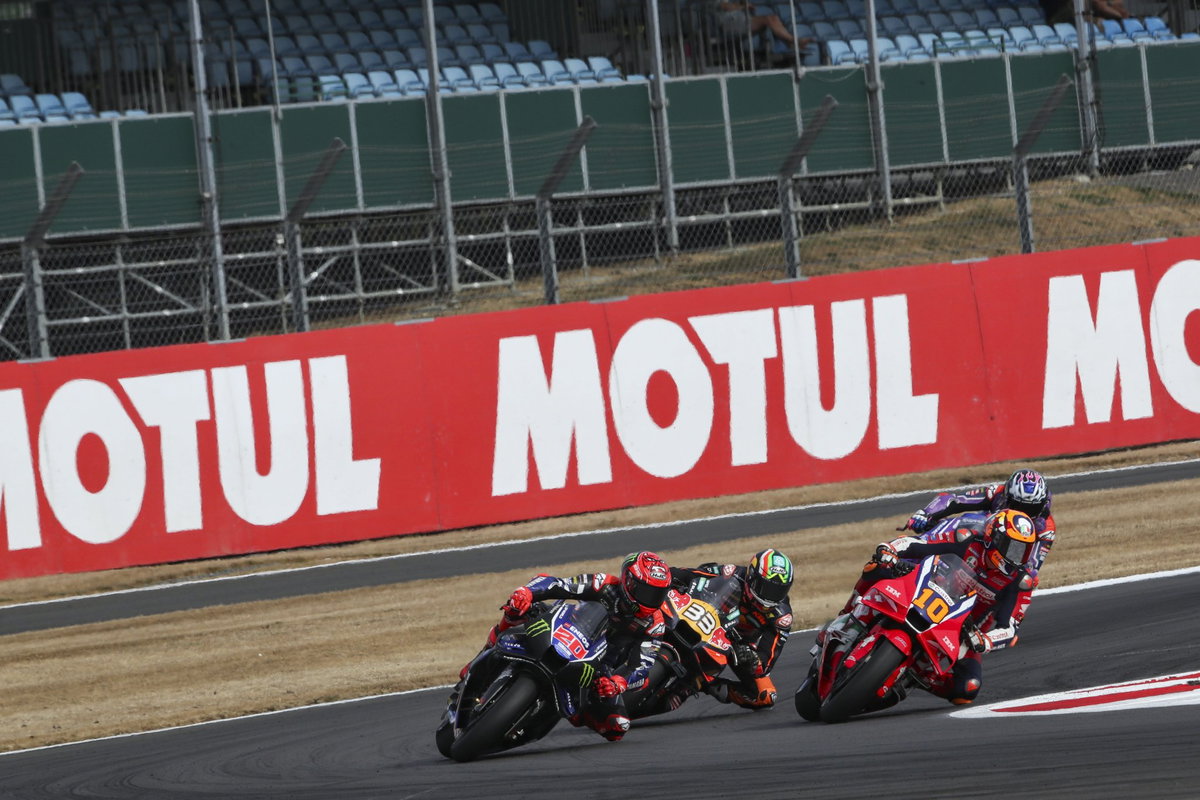
MotoGP rider Luca Marini has sparked a fresh debate about the championship’s demanding schedule, suggesting that the calendar should be condensed to allow for a longer off-season — but without reducing the number of races. The Italian, who rides for the Repsol Honda Team, believes that a more compact layout would ease the physical and mental toll on riders while preserving the sport’s global reach.
Marini’s comments come amid growing concerns about the intensity of the MotoGP season, which has expanded to 22 rounds in recent years. The current calendar stretches from late March to mid-November, with riders and teams crisscrossing the globe almost every other weekend. For Marini, the issue isn’t the sheer number of events but how they are clustered together.
“I think we need to revise the calendar, not reduce the races,” Marini said in a recent interview. “We can have the same number of grands prix, but maybe we can compress them a bit more, so we can have a longer winter break. That would be better for everyone — riders, teams, and even the fans who follow us.”
The idea of a condensed schedule is not new in motorsport. Formula 1 has experimented with back-to-back races and triple-headers to manage logistics, while MotoGP itself has occasionally scheduled consecutive rounds in adjacent regions to cut travel time. However, Marini’s proposal goes a step further, suggesting a more radical restructuring of the season’s flow.
The Physical and Mental Toll
The MotoGP season is notoriously grueling. Riders endure extreme physical demands, with races often held in sweltering heat and on circuits that test every muscle group. The mental strain is equally intense, as split-second decisions at 200 mph can mean the difference between a podium and a crash. A longer off-season would provide crucial recovery time, allowing riders to recharge and return stronger.
Marini, who has been a consistent points scorer since his debut in 2021, knows the challenges firsthand. “The season is very long, and the winter is very short,” he explained. “We finish in November and then we have to start again in January or February with testing. It’s not easy to keep the motivation high all the time.”
His call for a condensed calendar aligns with the views of several other riders who have voiced similar concerns in the past. Valentino Rossi, Marini’s half-brother and a nine-time world champion, often lamented the shrinking off-season during his career. More recently, reigning champion Francesco Bagnaia has hinted that the current pace is unsustainable.
Logistical Challenges
Condensing the calendar, however, is easier said than done. MotoGP races are held across four continents, and the sport’s commercial rights holder, Dorna Sports, must balance the interests of promoters, broadcasters, and teams. Some circuits have contractual clauses that guarantee specific dates, while others are constrained by weather conditions — a summer race in Qatar would be unbearable, for instance.
Moreover, a tighter schedule could increase the risk of back-to-back races in different time zones, which would complicate logistics and possibly reduce rider performance. Marini acknowledges these hurdles but believes they are surmountable. “We have to find a way to make it work,” he said. “Maybe we can have more double-headers at the same circuit, or group the flyaway races together. It’s a matter of planning.”
What It Means for the Championship
If Marini’s proposal were adopted, it could have significant implications for MotoGP. A longer off-season would give teams more time to develop their bikes, potentially leading to closer competition. It would also allow riders to recover from injuries more fully — a critical factor in a sport where crashes are common.
For fans, a condensed calendar might mean fewer weekends with races, but each event would carry more weight. The current season often feels like a marathon, with momentum shifts and title battles that ebb and flow. A more compact schedule could heighten the drama, as every round becomes even more crucial.
However, any changes would likely not take effect until the next commercial agreement, which runs through 2029. Dorna has already shown a willingness to innovate, introducing sprint races in 2023 and experimenting with different formats. The question is whether they will heed Marini’s call for a calendar overhaul.
For now, Marini remains focused on the immediate challenge: the upcoming races. But his words have planted a seed that could grow into a significant debate in the MotoGP paddock. As the season progresses, expect more riders to weigh in on the issue, and perhaps even the FIM and Dorna to take notice.
In a sport where tradition meets innovation, finding the right balance between spectacle and sustainability is key. Marini’s suggestion is a reminder that the human element — the riders who risk their lives for our entertainment — must always be a priority.


