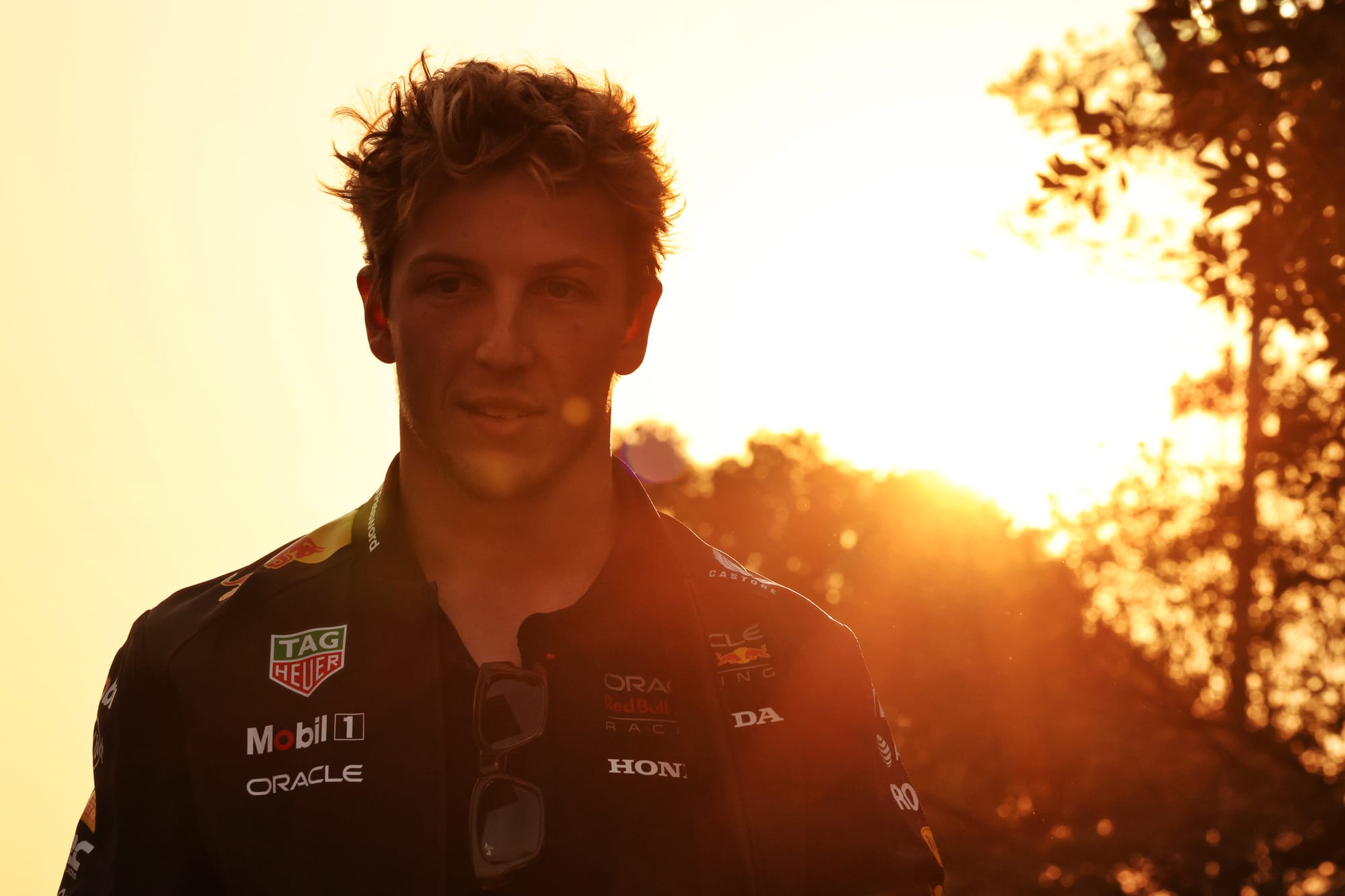
When Liam Lawson was summoned to replace an unwell Sergio Perez at Red Bull Racing for the Dutch Grand Prix, the motorsport world did a double take. The 24-year-old New Zealander, currently impressing at Racing Bulls, had been out of the senior team picture since his abrupt demotion in 2025. But this unexpected outing is far more than a one-off stand-in role; it’s a delicate moment that could shape his career trajectory.
A Free Hit, But Not Without Weight
On the surface, Zandvoort is a perfect opportunity for Lawson. He has never driven the Red Bull RB22, he’s been thrown in at the deep end with minimal preparation, and he’s sharing a garage with Max Verstappen, arguably the greatest driver of his generation. The car itself is notoriously tricky to handle, as many a seasoned driver has discovered. In such circumstances, the baseline expectation is modest failure – a points finish would be a bonus, a podium a miracle.
This is why the term ‘free hit’ is being bandied about. No rational observer will judge Lawson harshly if he finishes outside the top ten. Anything he achieves beyond that will only enhance his reputation. The pressure is off, and that could be the key to unlocking his best performance. When athletes are unburdened by expectations, they can enter a state of flow, focusing purely on the process rather than the outcome. That is precisely what Lawson needs to do to produce something special.
Yet, this is easier said than done. The very nature of the situation – a sudden call-up, a unfamiliar car, and the ever-present scrutiny of the Red Bull driver program – creates its own psychological hurdles. Lawson is not just driving for a result; he’s driving for his future.
Learning from the Past
This is not Lawson’s first rodeo with Red Bull Racing. In 2025, he was promoted to the senior team after a promising stint at Racing Bulls. But that experience turned sour quickly. He looked lost in the first two races, and Red Bull, in a move that drew widespread criticism, axed him before he had a chance to settle. The team’s failure to back a young driver they had chosen to promote was a glaring error, one that reflected poorly on the organization’s management style.
Fortunately, the Red Bull of today is a different beast. Laurent Mekies, who took over as team principal, has worked with Lawson before and knows how to extract his potential. The support structure is more nurturing, the communication clearer. That gives Lawson a fighting chance to show the world what he’s truly capable of.
But the shadow of 2025 still looms. Lawson has spent the intervening months rebuilding his confidence at Racing Bulls, delivering consistent performances that have silenced many doubters. He’s proven himself to be a solid midfield driver, adapting well to the new power unit regulations and developing a feel for the car that suits his aggressive style. Yet, despite this, his seat for 2027 is not secure. The Red Bull driver conveyor belt never stops, and the emergence of Formula 2 championship leader Nikola Tsolov has put Lawson’s future under a microscope.
What’s Really at Stake
So, while Zandvoort is a free hit in terms of results, the underlying stakes are significant. This is Lawson’s chance to demonstrate to Red Bull’s hierarchy just how much he has matured as a driver. It’s less about winning a permanent seat with the senior team – that ship has likely sailed, at least for now – and more about solidifying his place in Formula 1.
A strong showing in the RB22 would underline that he deserves to be in a competitive midfield car, whether that’s with Racing Bulls or another team. It would send a message to every team principal on the grid that he is a driver worth investing in. Conversely, a poor weekend – even if excusable – could give Red Bull the excuse they need to shuffle their lineup and make room for Tsolov.
That’s the harsh reality of the Red Bull ecosystem. But Lawson has the perfect mindset to handle it. He’s always been a fighter, someone who thrives on adversity. He knows that this weekend is not about proving he can beat Verstappen; it’s about proving he belongs in Formula 1.
The Dutch Grand Prix is a unique challenge, with its banked corners and passionate orange-clad crowd. But for Lawson, it’s just another race, another opportunity to do what he loves. If he can block out the noise and focus on the task at hand, he might just produce the performance of his career. And if he does, the rewards could be immense.
In the end, this is a no-downside, all-potential-upside weekend for Lawson. The worst that can happen is he finishes where many expect, and the best is that he stuns the world. Either way, he has nothing to lose and everything to gain. The question is whether he can seize the moment.