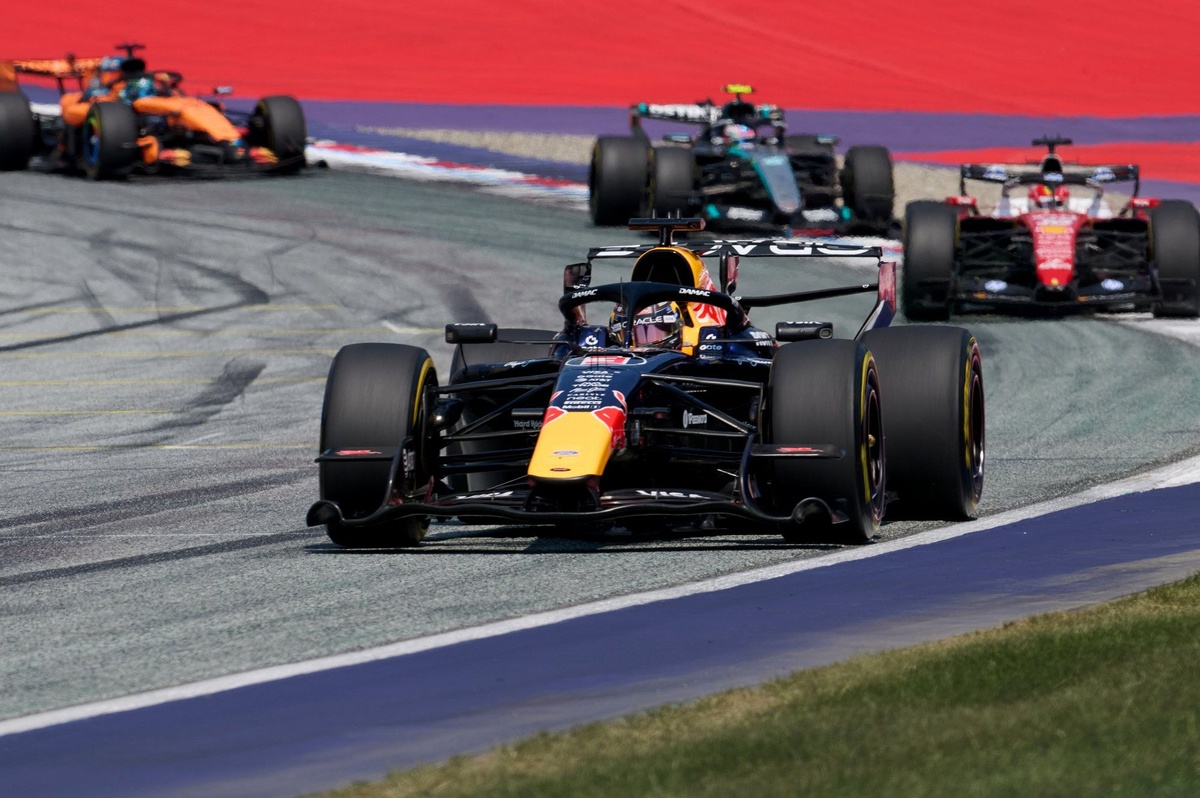
Formula 1’s 2026 season has been defined by a wave of technical innovation, and none has turned more heads than the rotating rear wing – affectionately dubbed the ‘Macarena’ by Ferrari team principal Frederic Vasseur. After months of speculation, the FIA has now confirmed that these wings are fully legal and will remain a fixture of the sport. The news is a blow to Red Bull, who were caught off guard by the concept and have admitted they had to do ‘more work’ to respond.
The Macarena Wing: A Game-Changer
The rotating rear wing, which pivots in a side-to-side motion reminiscent of the famous dance, was first unveiled by Ferrari during winter testing. The Scuderia managed to surprise several rivals, including McLaren, with the innovative solution. The wing’s ability to alter its angle mid-corner provides a significant aerodynamic advantage, improving downforce and stability in ways traditional fixed wings cannot match.
Vasseur, known for his sharp wit, quickly coined the nickname ‘Macarena’ – a moniker that has stuck within the paddock. The visual effect of the wing in action, with its rhythmic oscillation, is both striking and effective. Early data suggests that the wing can shave precious tenths off lap times, making it a coveted piece of kit for any team looking to gain an edge.
FIA’s Stance: Innovation Welcome
In a clear message to teams, the FIA has confirmed that the Macarena wing complies with all current technical regulations. The governing body has expressed its satisfaction with the innovation, praising it as a creative solution that aligns with F1’s spirit of pushing boundaries. This endorsement effectively green-lights the technology, ensuring that teams can continue to develop and refine their versions without fear of a mid-season ban.
The FIA’s decision is significant. In a sport where regulation changes often spark controversy, this move signals a willingness to embrace ingenuity. It also sets a precedent for future innovations, encouraging teams to think outside the box. For fans, it means the spectacle of these dynamic wings will be a permanent feature of the 2026 season and potentially beyond.
Red Bull’s Uphill Battle
For Red Bull, the news is a double-edged sword. The team, which has dominated the sport in recent years, was not among the first to adopt the Macarena wing. In fact, they were caught napping during Ferrari’s winter testing reveal. Red Bull’s technical director, speaking on condition of anonymity, admitted that the team had to ‘do more work’ to catch up. The admission is rare for a squad that prides itself on being at the forefront of innovation.
Red Bull’s initial lack of development on the concept has put them on the back foot. While they have since scrambled to introduce their own version, the gap in development time is evident. The team has been forced to play catch-up, a position unfamiliar to a group accustomed to leading the pack. With the FIA’s confirmation that the wings are here to stay, Red Bull can no longer hope for a regulatory reprieve. They must now invest heavily in refining their own solution to remain competitive.
Implications for the Championship
The FIA’s backing of the Macarena wing could have profound implications for the championship battle. Ferrari, who pioneered the concept, stand to gain the most. Their early adoption and development have given them a head start that could prove decisive. McLaren, too, have been quick to develop their own version, ensuring they remain in the hunt.
For Red Bull, the challenge is clear: they must accelerate their development programme to close the gap. The team’s resources are vast, but time is not on their side. Every race without a fully optimised Macarena wing is a race where they are ceding ground to their rivals.
A New Era of Innovation
The Macarena wing represents more than just a technical curiosity; it symbolises a new era of innovation in Formula 1. As teams continue to explore creative solutions within the regulations, the sport is evolving in exciting ways. The FIA’s willingness to support such developments bodes well for the future, promising a spectacle that is both technologically advanced and visually captivating.
For now, all eyes are on the next race, where the Macarena wings will be in full effect. Will Ferrari’s early advantage hold? Can Red Bull mount a rapid response? One thing is certain: the 2026 season has just gotten a whole lot more interesting.