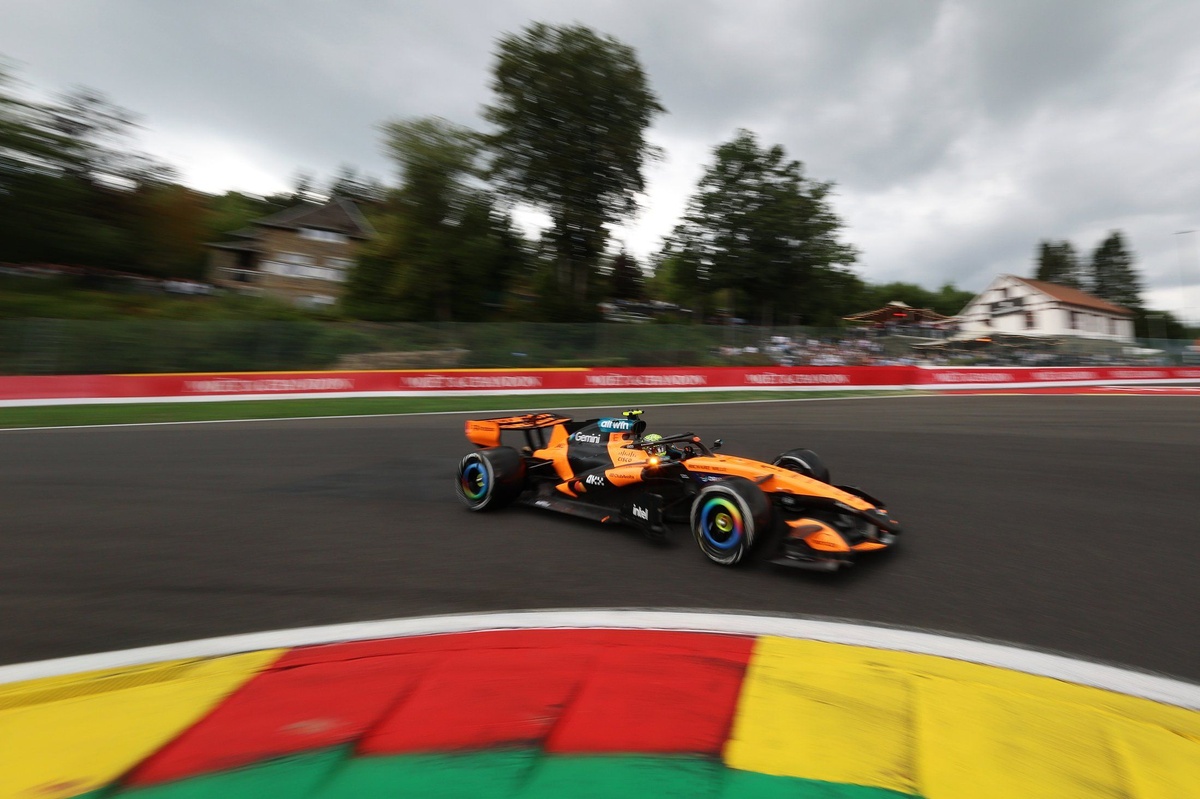
The debate over Formula 1’s 2026 technical regulations has simmered since before the season opener. Periodically, it boils over, particularly at circuits dubbed ‘energy-starved’ – tracks where the combination of corner types and the ratio of corners to straights makes it difficult for the new-generation cars to recharge their batteries during a lap.
At those venues, drivers have been vocal about the need to lift and coast more than ever, nursing the hybrid systems to ensure they have enough electrical energy to complete the lap without a sudden loss of power. The challenge has led some to question whether the new rules have made the racing too processional, with drivers more focused on managing energy than pushing to the limit.
But McLaren, one of the teams that has adapted well to the new regulations, insists that the human element remains as important as ever. In fact, the team argues, the energy management aspect of the 2026 cars has actually amplified the difference a top-tier driver can make.
A Different Kind of Challenge
Under the old rules, drivers could lean on the engine’s internal combustion unit to provide consistent power, with the hybrid system acting as a boost. Now, with a more equal split between the internal combustion and electrical power, the onus is on the driver to extract the maximum from the energy store. That means not only knowing when to lift and coast but also how to position the car on the track to maximize regeneration, and when to deploy the extra power for overtaking or defending.
McLaren’s engineering team has been quick to point out that data alone cannot solve the puzzle. A driver’s feel for the car, their ability to adapt their driving style to the energy state, and their racecraft in managing traffic all become more critical. The best drivers, they argue, are those who can find the sweet spot between saving energy and maintaining lap time, and who can make split-second decisions that the simulations might not predict.
This is not a new concept – drivers have always managed tires, fuel, and brakes – but the 2026 rules have added an extra layer of complexity. At energy-starved circuits, the margin for error is tiny. A small mistake in energy deployment can cost a driver several tenths of a second, and over a race distance, that can be the difference between a podium and a midfield finish.
The Human Factor
McLaren’s stance is that while the cars are more complex, the driver’s role has not been diminished. Instead, it has evolved. The driver is now a key part of the energy management system, working in tandem with the engineers to optimize performance. The best drivers are those who can communicate effectively with the pit wall, provide accurate feedback on how the car is behaving, and execute the strategy flawlessly under pressure.
This view is supported by the early season results, where races at circuits like Monaco and Budapest – both energy-starved – have seen drivers who are known for their smooth driving styles and technical acumen rise to the top. At those tracks, the ability to conserve energy while still setting competitive lap times has been a differentiator.
Of course, not everyone is convinced. Some drivers have complained that the new rules have made the racing too much about management and not enough about flat-out driving. They argue that the energy constraints have removed the ability to push for an entire stint, making the racing more about survival than speed.
But McLaren counters that this is exactly where the best drivers can shine. The ones who can adapt, who can find ways to be fast without depleting the battery, and who can make overtakes at the right moments – they are the ones who will rise to the top. The 2026 rules have not made the driver irrelevant; they have simply changed what it means to be a complete driver.
Looking Ahead
As the season progresses, McLaren’s philosophy will be put to the test at more energy-demanding circuits. The team believes that the drivers who embrace the challenge and work closely with their engineers will come out on top. They are confident that the best drivers will still make a difference, and that the fans will see that the human element remains at the heart of Formula 1.
In a sport where technology often seems to dominate, it is refreshing to hear a team argue that the driver is still the most important variable. Whether that proves to be true over the course of the season remains to be seen, but McLaren’s belief is a strong statement about the enduring value of driver skill in the modern era.